 EN
EN
How Hologram Sticker Types Differ in Security Level and Authentication Clarity
Overt Hologram Sticker Features: 2D/3D, Dot-Matrix, and Kinetic Effects for Instant Visual Verification
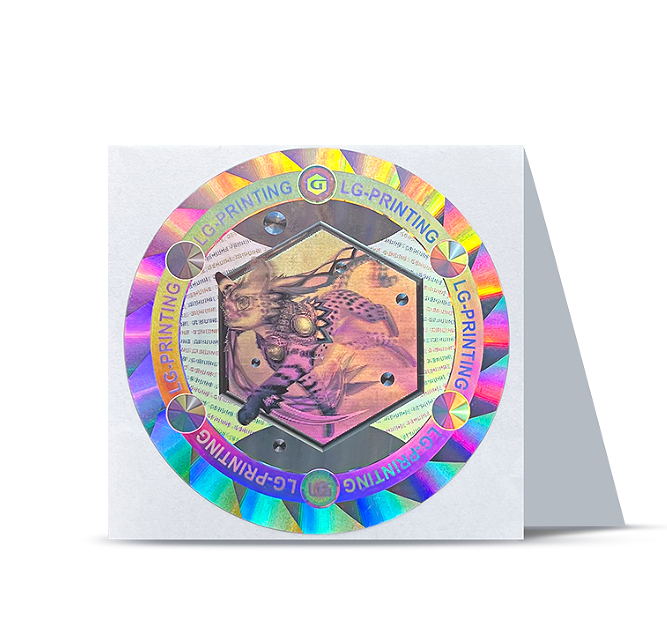
Hologram stickers that are clearly visible offer quick authentication without needing any tools, thanks to their unique optical effects. The 2D and 3D versions create depth illusions and color changes through layered images, making it easy for shoppers to spot genuine products just by looking. Some designs have tiny dot patterns that can only be seen when magnified, and others include moving parts like spinning logos or changing graphics that react differently depending on how they're tilted or lit up. These kinds of features act as the front line against fakes. A recent study found that around 78 percent of people trust kinetic holograms as real deal indicators (Brand Protection Journal 2023). When manufacturers combine different types together, particularly mixing depth effects with motion elements, the overall look becomes complicated enough to stop most counterfeiters in their tracks. Industry reports suggest this combination leads to anywhere between 40 and 60 percent fewer fake products circulating in the market.
Covert & Forensic Hologram Sticker Layers: Microtext, CLR, and Fluorescent Inks for Expert-Level Validation
Specialized equipment is needed to verify hidden security features, which go well beyond what regular inspections can catch. Take microtext for instance it's usually smaller than 0.2mm tall and needs about 10 times magnification to read properly. These tiny texts are often tucked inside graphics so most people won't notice them at all. Then there are those CLR markers they change color permanently when someone tries to clean them with standard chemicals, making any tampering obvious. Some items also have fluorescent ink that shines brightly under blacklight, plus infrared tags that nobody sees normally but show up big time on special scanners. Different levels of security work together pretty well. People working in the field typically carry around UV lights to do quick spot checks, whereas lab technicians run more thorough tests using CLR analysis and those fancy spectrum readers. According to research from last year, combining microtext with fluorescent elements cut down fake product creation by almost 90%. Basically, when materials have unique chemical reactions and optical traits, counterfeiters find it much harder to copy them accurately.
Tamper-Evident Design and Material Engineering in Hologram Sticker Performance
Void Patterns, Residue Triggers, and Adhesive Chemistry That Prevent Removal Without Damage
Real tamper proofing isn't just about what can be seen at first glance. The physical aspect has to be something that cannot be undone once it happens. Take void pattern tech for instance. These stickers have hidden words like "VOID" built right into them. When someone tries to peel them off, those words show up clearly on whatever surface they were stuck to, making it obvious someone messed with them. Another layer comes from special adhesives designed to actually stick chemically to packaging materials. If someone removes these stickers, they leave behind stains or cause the material to separate from itself, which tells anyone looking that there was unauthorized access. There's also what we call destructive substrate engineering. Certain proprietary films will literally break apart into pieces when forced off, and those pieces can't be put back together properly. All these different features work together so that every single sticker acts as its own kind of security record keeper. This means companies have actual proof in case there's ever any question about whether their products were tampered with, and this evidence could even hold up in court if needed.
Transparent and Hot-Stamping Hologram Stickers: Aesthetic Integration Without Compromising Tamper Evidence
Security doesn't have to come at the cost of good looks anymore. Take those clear hologram stickers for instance they put these super thin, see-through layers right on top of brand logos and packaging designs. The best part? They don't mess up the original look at all but hide little security features underneath like tiny holes that only show when someone tries to peel it off, plus special glues that leave behind telltale marks if removed. Then there's hot stamping which works differently by actually building the holograms into the packaging material itself during production time. These get fused so tightly with materials like shiny foil or plastic that they become one piece. What matters most is that both methods still work great for security purposes. When someone tampers with the packaging, the glue leaves residue just like before, and those specially designed weak spots in the hologram will break apart in predictable ways that can't be fixed. For companies selling expensive gadgets, medicine, or designer items, this means keeping their fancy packaging looking pristine while still getting all the protection needed against counterfeiting and theft.
Custom Hologram Sticker Solutions for Multi-Layer, Brand-Specific Anti-Counterfeiting
Embedding Logos, Sequential Serial Numbers, UV Elements, and Dynamic QR Codes into the Hologram Sticker
When companies customize their hologram stickers, these security features stop being just generic items and become part of the brand's own authentication system. Putting proprietary logos right into the holographic design makes sense because those special diffraction patterns are really hard for counterfeiters to copy. Serial numbers on each sticker allow tracking at the individual level too. These numbers link to secure databases where anyone can check authenticity instantly and monitor products through the supply chain. The UV-reactive parts stay hidden when normal lights are on, but pop out brightly under UV scanners used by stores and distributors for quick checks. Then there are dynamic QR codes which take things even further. Smartphones can scan them to access cloud platforms showing all sorts of product info like where it came from, what batch it belongs to, and current status. Best of all, manufacturers can shut down or update these codes remotely if needed. This kind of flexibility gives brands an edge over traditional security methods that don't change with new threats.
| Feature | Authentication Level | Verification Method |
|---|---|---|
| Embedded Logos | Overt | Visual inspection |
| UV Elements | Covert | Ultraviolet light scanning |
| Dynamic QR Codes | Forensic | Cloud database verification |
FAQ
-
What are overt hologram sticker features?
Overt features are those that are visible to the naked eye, such as 2D/3D designs and kinetic effects that provide instant visual verification. -
How do covert hologram layers work?
Covert layers include features like microtext and fluorescent inks that require special equipment for verification. -
What are tamper-evident hologram stickers?
These stickers show visible signs, like void patterns or residue, when tampered with, ensuring the product's integrity. -
Can hologram stickers be customized?
Yes, companies can customize hologram stickers by embedding logos, serial numbers, and dynamic QR codes to align with their specific brand needs.
Table of Contents
-
How Hologram Sticker Types Differ in Security Level and Authentication Clarity
- Overt Hologram Sticker Features: 2D/3D, Dot-Matrix, and Kinetic Effects for Instant Visual Verification
- Covert & Forensic Hologram Sticker Layers: Microtext, CLR, and Fluorescent Inks for Expert-Level Validation
- Tamper-Evident Design and Material Engineering in Hologram Sticker Performance
- Custom Hologram Sticker Solutions for Multi-Layer, Brand-Specific Anti-Counterfeiting
- FAQ